Overview
ExpressMyself is a Mobile-Assisted Language Learning (MALL) application designed to help non-native English speakers master spoken communication skills in various contexts. Grounded in social constructivist and interactionist SLA theories (Vygotsky & Cole, 1978; Swain, 1985), it combines cutting-edge technologies—Automated Speech Recognition and Generative AI—with Task-Based Language Teaching principles (Ellis, 2003). Unlike traditional apps that focus solely on AI or merely connect learners to human tutors, ExpressMyself offers both interactive AI-driven practice and personalized human guidance, ensuring contextualized learning experiences that build fluency, confidence, and cultural appropriateness in English communication.


1. Sign-up Page
Upon opening the app, users are greeted with a friendly illustration and a simple sign-up or login interface. This page introduces ExpressMyself’s learner-centric philosophy, reflecting its foundation in constructivist theory by making the user feel immediately welcomed and guided. The design ensures quick access to core features, emphasizing that the platform supports a range of real-world communicative tasks, from academic presentations to casual conversations.
2. Main Content
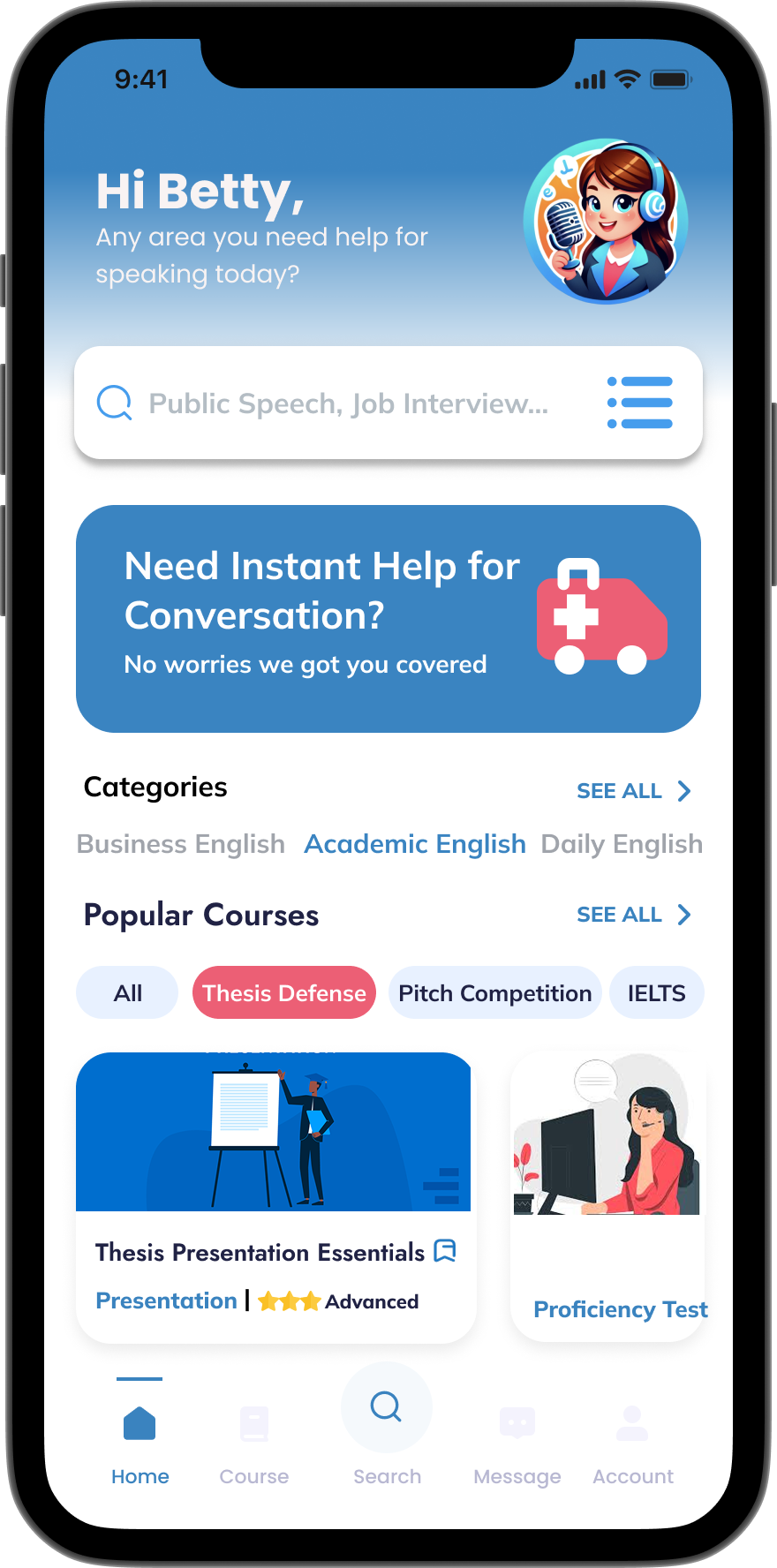
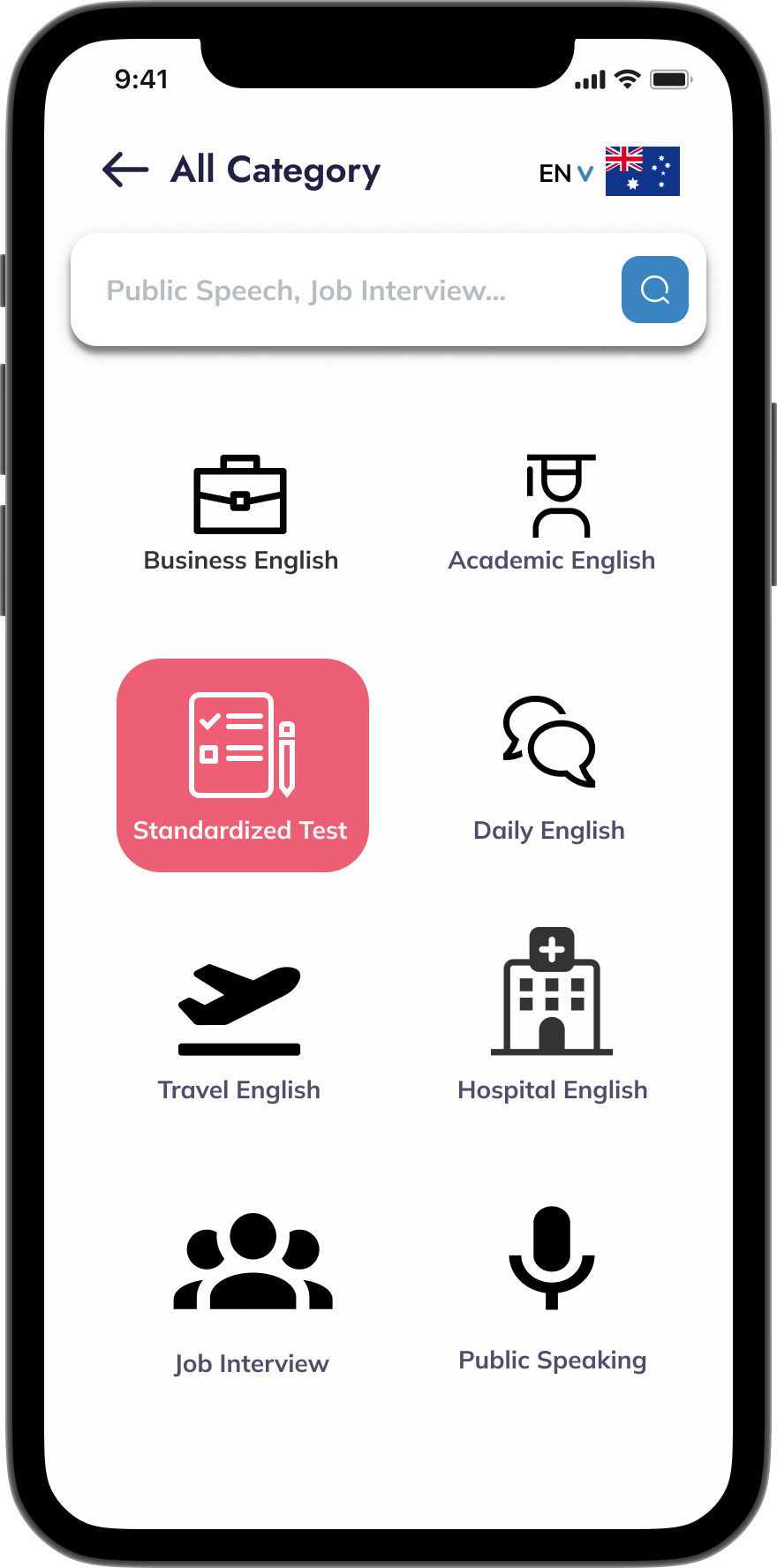
Once signed in, learners see a clear layout that categorizes different learning modules (e.g., Academic, Business, and Casual English). Drawing on Task-Based Language Teaching, these modules focus on practical tasks—like delivering a presentation or explaining medical symptoms. The app’s user-friendly interface, supported by Generative AI, provides a wealth of resources, interactive avatars, and live chat features that allow learners to explore content relevant to their personal or professional contexts.
3. Searching Page
A prominent search bar on this page enables learners to locate modules tailored to specific communication needs—such as job interviews or conference presentations. By typing in keywords, the user is directed to specialized resources, AI-driven practice scenarios, and human tutoring options. This flexible design is aligned with the principle of meaningful output (Swain, 1985), ensuring learners can easily find tasks that match their real-life speaking goals and receive immediate, context-specific support.
4. AI Tutor
The AI Tutor page showcases the interactive chatbot environment where learners can practice speech in real-time. Powered by Speech-to-text (STT), Automated Speech Recognition (ASR) and Generative AI, it offers targeted exercises, role-plays, and simulated conversations. Formative assessments are embedded to highlight areas needing improvement, reflecting the app’s commitment to continuous feedback loops (Kukulska-Hulme & Shield, 2007). Learners can also upload custom prompts or scenarios, receiving detailed feedback on pronunciation, grammar, and content relevance.
5. Feedback
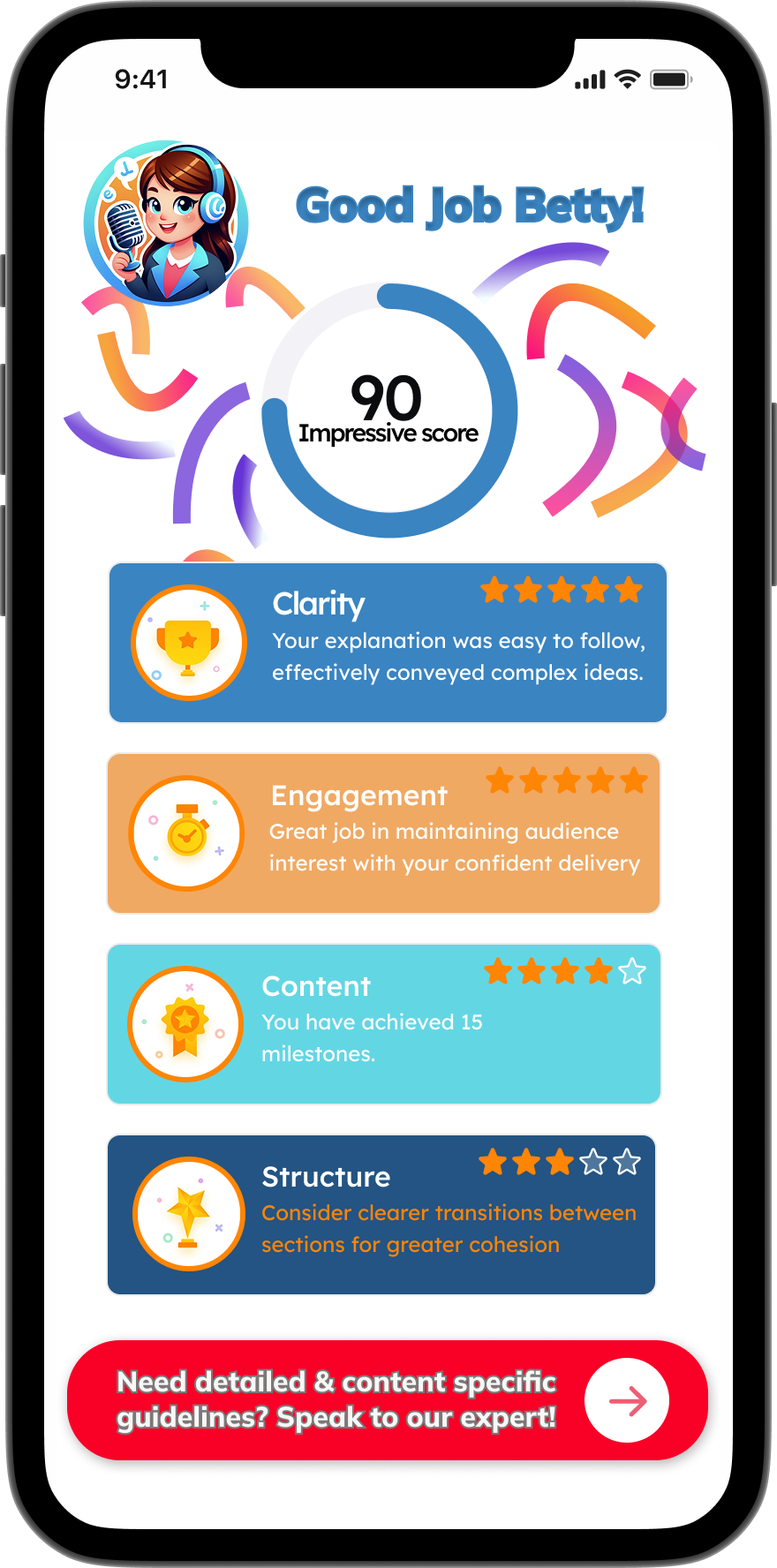
At the end of each session, learners receive a performance summary and actionable insights, modeled after recognized speaking and communication frameworks. A scoring system breaks down clarity, structure, engagement, and content, providing a snapshot of overall progress. The user can either continue refining skills with the AI Tutor or schedule a session with a human instructor for more nuanced guidance. This integration of human expertise addresses the emotional and context-specific nuances of communication that AI alone may not fully capture, ensuring a well-rounded and personalized learning experience.
 Yilin Zhang